
Your Competitive Advantage in Site Selection.
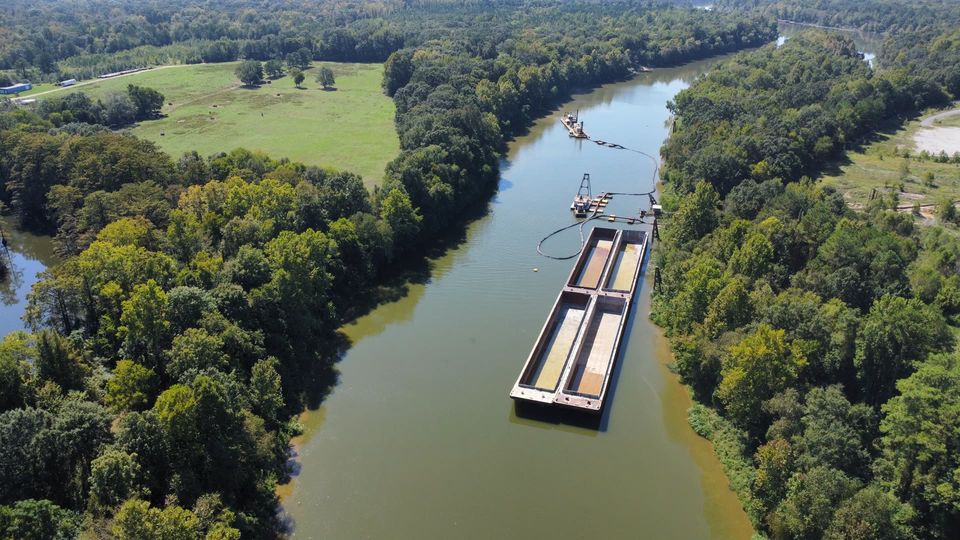
The Tennessee-Tombigbee Waterway anchors Marine Highway M-65, connecting site selectors with waterway-connected sites, multimodal infrastructure, and economic development partners across four states.
Advantages that are increasingly difficult to replicate anywhere else.
Seven reasons the corridor keeps winning defensible site recommendations.
Multimodal Connectivity
Integrated water, rail, highway, and air
Direct Gulf access
A straight shot to the Port of Mobile, one of America's fastest-growing container ports.
Interstate network
I-20, I-22, I-40, I-55, I-59, I-65, and I-81 serve the corridor.
Class I rail
Six Class I railroads (BNSF, Canadian National, CPKC, CSX, Norfolk Southern, and Union Pacific) provide nationwide connectivity.
Airports
Multiple regional and international airports across four states.
Sites Across the Corridor
Shovel-ready sites with multimodal connectivity
From Kentucky to the Gulf, industrial sites along the corridor offer water, rail, and highway access, and many are shovel-ready or certified by their state. The featured sites on the interactive map are shovel-ready, state-certified, or on a port with direct waterway access.
Competitive Power
Industrial electricity below the national average
Industrial power costs less in all four states than the U.S. average, served by public power, investor-owned utilities, and electric cooperatives across the corridor.
6.7¢
Tennessee
Per kilowatt-hour for industry, 2025
7.0¢
Kentucky
Per kilowatt-hour for industry, 2025
7.4¢
Mississippi
Per kilowatt-hour for industry, 2025
7.7¢
Alabama
Per kilowatt-hour for industry, 2025
U.S. average: 8.6¢ per kilowatt-hour. Confirm site-specific utility service and rates with the local economic development partner. Find your EDO partner
Workforce Availability
A labor pool that already knows how to make things
7.2M
Residents
A population base large enough for major operations, without metro cost-of-living pressures.
Education pipeline
Community colleges and public universities across all four states train for the region's industries, from welding and industrial maintenance to engineering.

Quality of place that retains talent
The same corridor that moves freight is where employees fish, boat, hunt, and raise families: lakes, public lands, and waterfront towns from Kentucky Lake to Mobile Bay. Engineers and skilled trades don't trade career for lifestyle here. They get both.
Cost Efficiency
Competitive operating costs at every level
30–50%
Transportation savings
Lower transportation costs versus trucking.
$13.90–17.90
Per-ton barge savings
Over rail and truck, on every ton you move.
Reduced infrastructure wear
One 8-barge tow replaces about 560 trucks: less road damage, less congestion, lower shared costs.
Supply Chain Resilience
Predictable delivery when it matters most
Guaranteed 9-foot channel
Maintained year-round by the controlled lock-and-dam system: transit certainty for time-sensitive supply chains.
Controlled slack water
Twenty-five locks and dams hold consistent water levels on M-65 in every season.
Reduced congestion
Direct access from inland origins to the Port of Mobile.
Commodity diversification
Chemicals, petroleum, metals, forest products, agriculture, machinery: reduced exposure to sector downturns.
Pro-Business Communities
Four states that compete to win your investment
Right-to-work, all four states
Alabama, Kentucky, Mississippi, and Tennessee give employers workforce flexibility.
State incentive programs
Tax abatements, infrastructure grants, workforce training credits, expedited permitting. TTWDA will gladly connect you to the right programs and people.
Pro-growth local leadership
County and municipal governments actively support development. TTWDA's EDO network connects you with the leaders who make deals happen.
Sources: Mississippi State University NSPARC, 2025 Tenn-Tom Economic & Social Impact Study (population, American Community Survey 2019–2023) · National Waterways Foundation / Texas A&M Transportation Institute (January 2022) · U.S. Energy Information Administration, Electric Power Monthly, February 2026, Table 5.6.B (2025 average industrial price, preliminary).
A proven industrial base.
The Tennessee-Tombigbee Waterway supports commerce, economic development, and recreation across the corridor.
- $1.2B
- Annual income impact across the corridor
- $328M
- Annual tax revenue: federal, state & local
- 18,669
- Jobs supported by waterway commerce
- 2.4×
- Return on federal investment
Source: Mississippi State University NSPARC, 2025 Tenn-Tom Economic & Social Impact Study. Figures reflect the Tennessee-Tombigbee Waterway, anchoring Marine Highway M-65.

Find your next site.
Explore industrial sites and transportation connections, then connect with the local economic development partner.
Local partners all along the corridor.
State, regional, and local economic development partners across M-65 bring the site details, incentives, and community knowledge. Reach out to them directly, or start with us for waterway questions and introductions to partners, shipping companies, engineers, and other waterway specialists.